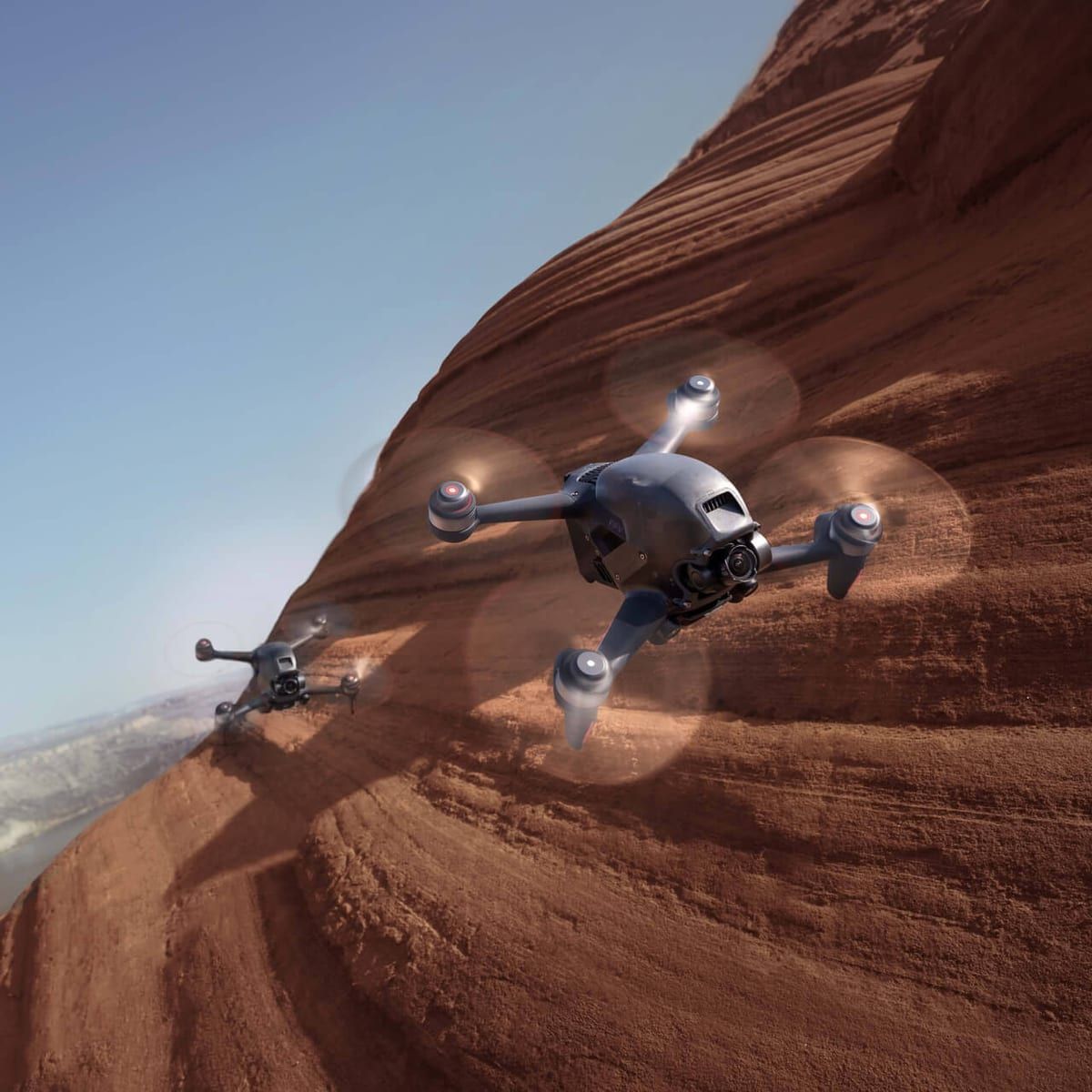
DJI FPV
The DJI FPV was DJI's first high-speed FPV drone: 140 km/h, 4K/60fps and O3 ultra-low-latency transmission. Discontinued, available on the secondary market.
Price (USD)
$400
Full Specifications
| Weight | 795 g |
| Flight Time | 20 min |
| Max Speed | 140.4 km/h (Sport mode) |
| Camera | CMOS 1/2.3", 12 MP, FOV 150° |
| Video | 4K/60fps, 1080p/120fps |
| Obstacle Avoidance | Forward only (emergency braking) |
| Max Range | 10 km (FCC) |
| Wind Resistance | Level 5 (24 mph) |
| GPS | GPS + GLONASS + BeiDou |
| Dimensions | 255 × 312 × 127 mm |
Launched in March 2021, the DJI FPV was the company's first foray into the high-speed FPV market. The proposition was radical: FPV racing drone speed and immersive perspective, with DJI's ease-of-use and assistance modes. It partially succeeded: it was DJI's best-selling drone in its launch month. But the arrival of the Avata in 2022 and the Avata 2 in 2024 quickly made it obsolete.
Discontinued by DJI in 2023, the DJI FPV still appears on the secondary market and in remaining retailer stock.
Why It Was Significant
At launch, the DJI FPV offered 140 km/h speed, the O3 transmission system with ultra-low latency video feed, and three flight modes: Normal (GPS-assisted), Sport, and Manual (acrobatic, for experienced FPV pilots). It was the first FPV drone with all-DJI ecosystem compatibility (app, goggles, firmware) without requiring any custom electronics knowledge.
Why It's Now Outclassed
The Avata 2 is lighter, has lateral obstacle avoidance, a superior camera (1/1.3" vs 1/2.3"), better video quality (10-bit D-Cinelike vs 8-bit), and the RC Motion 3 controller for more intuitive flying. The DJI FPV's forward-only emergency braking is its only obstacle avoidance, inadequate for confident flying near obstacles.
For buyers looking at the secondary market in 2025, the Avata 2 is the better investment despite the higher price, unless you find the DJI FPV at a very steep discount and primarily want a speed demonstration.
Sources: DJI: FPV specs