DJI Neo
DJI Neo official price (per DJI): $199, unchanged in 2026. Weighs 135g, shoots 4K/60fps, and launches from your palm without a controller. Full specs inside.
Price (USD)
$199
Full Specifications
| Weight | 135 g |
| Flight Time | 30 min |
| Max Speed | 54 km/h |
| Camera | CMOS 1/2", 12 MP |
| Video | 4K/60fps, FHD/120fps |
| Obstacle Avoidance | Downward (via firmware) |
| Max Range | 10 km (FCC, with RC-N3) |
| Wind Resistance | Level 4 (17 mph) |
| GPS | GPS + GLONASS + BeiDou |
| Dimensions | 105 × 105 × 36 mm |
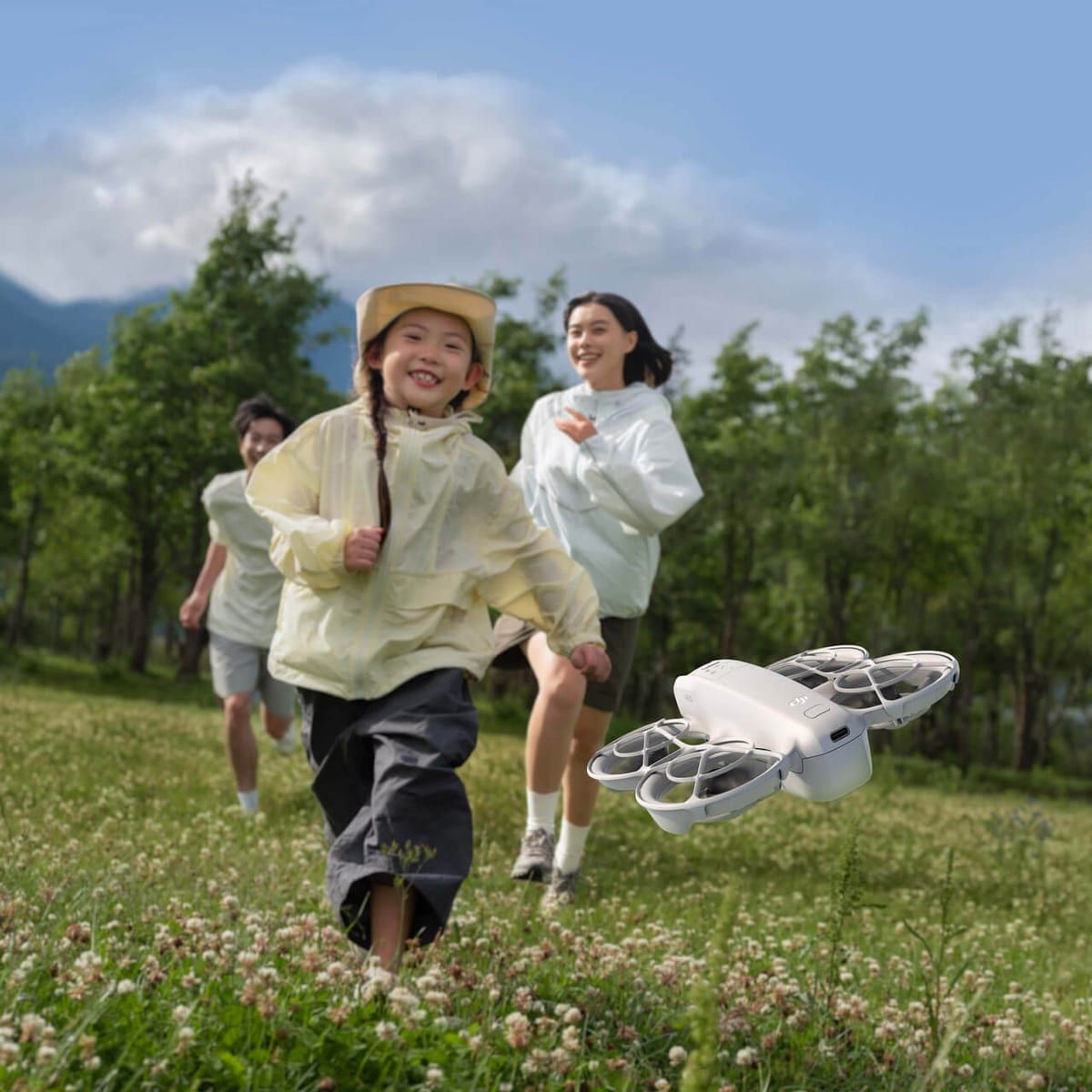
Launched in August 2024, the DJI Neo is the smallest 4K drone from DJI: 135 grams, fits in the palm of your hand, and can take off directly from your hand without a controller: just press the takeoff button on the drone body and select the flight mode in the app. It's a different proposition from anything DJI had released in the consumer market before.
Current price (per DJI): $199, unchanged since launch.
Hand Takeoff and Solo Operation
The Neo's defining feature is its ability to operate without a remote controller. Users launch directly from the palm, select from six QuickShot automated flight modes via the DJI Fly app, and the drone executes the sequence and returns to hand automatically. For casual social content creators who don't want to learn traditional RC piloting, this is a significant accessibility step.
Adding the RC-N3 controller unlocks manual flight control and extends range to 10 km. The Fly More Combo includes the controller, extra batteries, and a charging hub.
Camera and Stabilization
The 1/2" CMOS sensor with three-axis mechanical gimbal captures 4K/60fps and 1080p/120fps (for slow motion). The smaller sensor compared to the Mini 2 SE or Mini 4 Pro means lower dynamic range and more noise in low light, but for outdoor daylight social content, the footage quality is adequate.
Limitations
At 135g and Level 4 wind resistance (about 17 mph), the Neo should not be flown in windy conditions. Effective range without a controller is limited; the app connection range is far shorter than the RC-N3's 10 km radio range. Obstacle avoidance is limited to downward detection via firmware (no physical sensors).
The Neo is not a professional tool; it's a social content companion for calm-weather outdoor shooting.
FAQ
Sources: DJI: Neo specs