Skydio F10 Lightrunner: 100-MPH Fixed-Wing Drone (2026)
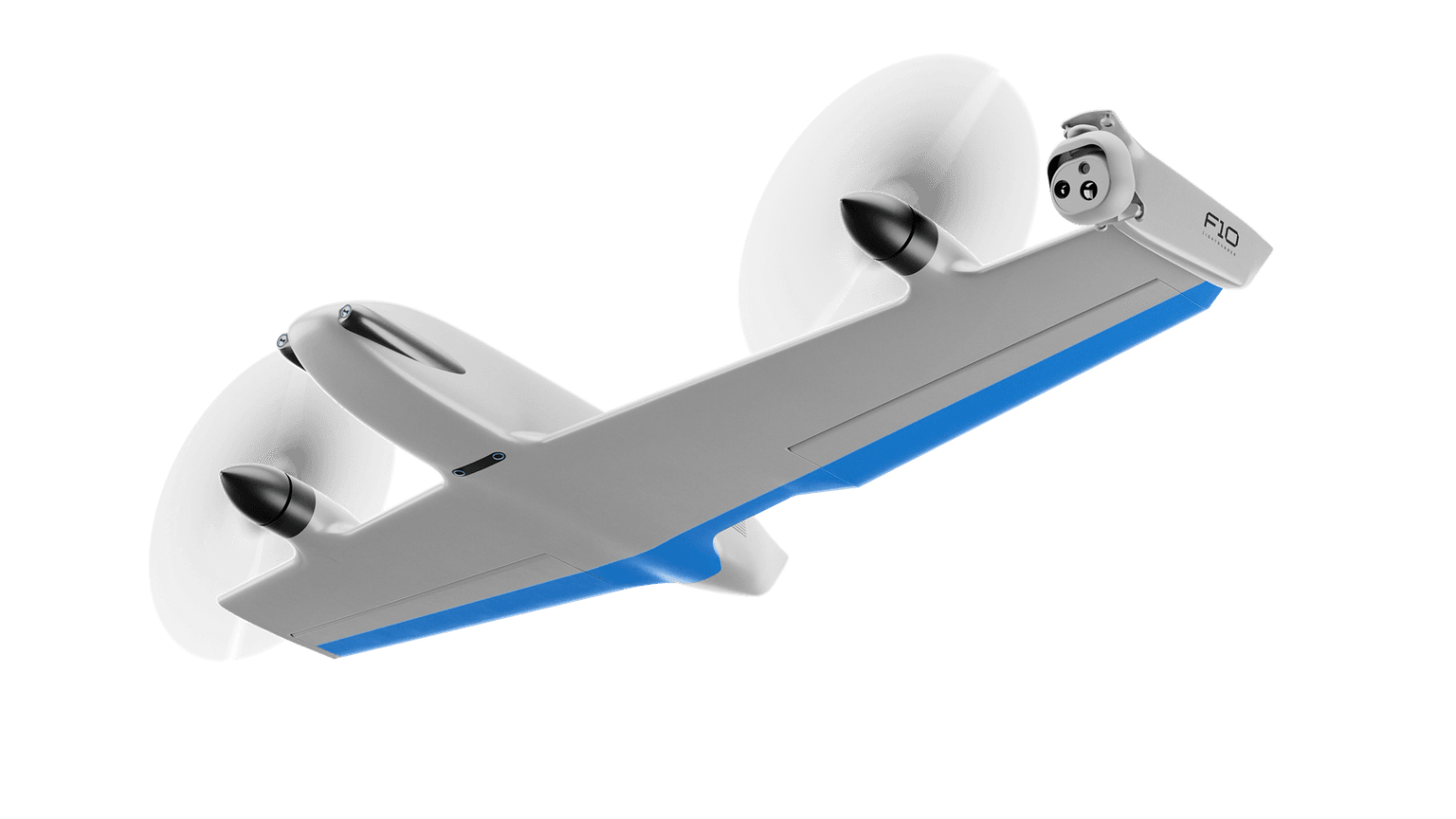
Skydio unveiled the F10 Lightrunner on September 23, 2026, its first fixed-wing aircraft, at the company's Ascend conference in Summerlin, Nevada. The drone flies up to 100 mph over a 30-mile radius and covers roughly 3,000 square miles per launch, taking off and landing itself from a new robotic dock called MegaDock without a runway or ground crew present.
CEO Adam Bry called it "the most advanced fixed-wing drone that has ever existed," positioning the F10 to extend drone-as-first-responder and infrastructure-inspection programs far beyond the range of Skydio's existing quadcopter dock, the X10.
Background
Skydio built its business on the X10, a quadcopter that lives inside a weatherproof Dock and launches autonomously when a 911 call or inspection request comes in — a model known as drone-in-a-box. That system passed 1,070 field deployments and 4 million flights within a year of its commercial debut, according to Skydio's own milestone announcement covered by PickDrones. But a quadcopter's range is limited by battery draw from hovering flight, which typically caps missions at a few miles from the dock.
A fixed-wing drone — an aircraft with rigid wings that generate lift through forward motion rather than spinning rotors, explained in PickDrones' guide to drone types — trades vertical takeoff for dramatically longer range and endurance. The F10 closes that gap: Skydio designed it to fly far enough that a single MegaDock installation can cover a metro area or a long stretch of pipeline, road, or transmission line that would take dozens of quadcopter docks to match.
F10 Lightrunner: Specs and Design
| Spec | F10 Lightrunner |
|---|---|
| Top speed | 100 mph |
| Flight radius | 30 miles |
| Coverage per launch | ~3,000 sq mi |
| Max flight time | 120 minutes |
| Weight (with batteries) | 15.43 lb (7 kg) |
| Dimensions | 57.8 × 33.9 × 7.7 in |
| Service ceiling | 11,000 ft density altitude |
| Launch/land wind tolerance | Up to 27 mph |
| Customer deployment | 2027 |
The F10 uses a SideEye camera layout, mounting the gimbal on the wingtip outside the propeller plane instead of under the fuselage — a change Skydio says eliminates the blind spots that a wing-mounted rotor would otherwise create. The payload carries a 48MP telephoto camera (190mm-equivalent), a 64MP narrow camera, a FLIR Boson+ thermal sensor rated below 30 mK sensitivity, and six 50MP navigation cameras for obstacle avoidance and precision landing.
Launch and recovery run through Skydio's RTOL (Robotic Takeoff and Landing) system: a suction-based gripper on the dock releases and catches the aircraft with no runway, catapult, or parachute-only recovery required, and Skydio rates a full launch cycle at 20 seconds. An integrated parachute still meets FAA Part 107 Category 3 requirements for flight over people, and the airframe is built to comply with the NDAA's restrictions on Chinese-made drone components.
MegaDock and the New Software Platforms
MegaDock, the F10's home base, is a large ground installation rather than a wall-mounted box: 14.5 by 20.75 feet (4.4 by 6.3 m) and 9.5 feet (2.9 m) tall including its safety fence, weighing roughly 6,900 lb (3,130 kg). It requires a hardwired 200–240V power supply on a dedicated 100-amp breaker and a Cat6 network line, and it's rated to withstand 80 mph winds unanchored or 110 mph anchored. One MegaDock holds up to five F10s, keeping three airborne simultaneously while two recharge — each aircraft goes from 10% to 90% battery in 45 minutes.
Skydio also launched two software platforms alongside the hardware. Asset Command targets utilities and other operators of large fixed infrastructure, importing data from GIS and CMMS systems to automate inspection planning; Skydio developed it with input from AEP, Chevron, Dominion Energy, and Southern Company. Security Command turns a drone fleet into a standing security capability, dispatching aircraft to a location with a live video feed for the operator. Both platforms are available for purchase now, with general availability set for early 2027 — the same window Skydio has set for the first F10 customer deployments.
What This Means for Drone Pilots
The F10 doesn't compete with consumer or prosumer quadcopters — it's an enterprise BVLOS platform aimed at public-safety agencies, utilities, and infrastructure operators that already run Skydio Dock programs. For agencies weighing an upgrade, the practical tradeoff is coverage versus footprint: MegaDock needs dedicated power infrastructure and a much larger installation site than a quadcopter dock, but one unit can watch ground a fleet of X10 docks would need to cover the same territory.
For pilots and operators in the DFR and infrastructure-inspection space more broadly, the launch signals where the market is heading: fixed-wing, long-range aircraft flying routine BVLOS missions from autonomous docks, the same operating model the FAA's still-pending Part 108 rule is meant to formalize nationwide. Readers tracking that rulemaking can follow PickDrones' guide to BVLOS flight for how the current waiver process works while Part 108 remains under review.
Operators outside the US should note the F10 has no announced international rollout yet — Skydio's public statements to date describe US customer deployments beginning in 2027, with no timeline given for other markets.
FAQ
Sources: DroneXL | Skydio via PR Newswire
More like this
Related Articles
Drone Pilot Guilty in CLT Runway Case: Up to 1 Year Jail
A Charlotte man faces up to a year in prison for flying a drone between two live runways at CLT — here's the federal law he broke…
Amazon Drone Noise Sparks Revolt Before 500-City Rollout
Texas residents describe Amazon delivery drones as a flying beehive as noise complaints mount ahead of its planned 500-city US exp…
Elroy Air Boosts Funding to $175M, Lockheed Backs It
Elroy Air raised its PIPE funding to $175 million on Sept. 24, 2026, with Lockheed Martin Ventures backing the Chaparral cargo dro…